
Electrification Systems for Next-Generation Construction Vehicles
With proven, production‑ready solutions and deep engineering insight, we enable manufacturers to move confidently from diesel‑only to hybrid and fully electrified machines while maintaining reliability, serviceability, and speed to market.
The Complexity of Construction Vehicle Electrification
Electrifying heavy construction vehicles introduces system-level challenges that extend far beyond swapping out components. OEM engineering teams are often tasked with electrifying legacy platforms while simultaneously meeting strict cost, reliability, and production timelines. Without a unified architecture to guide the process, the risk multiplies at every stage.
System Integration Challenges
- Multi-axis electric motion systems with competing demands
- Complex power distribution architectures
- Excessive wiring and cabling across platforms
- Hardware/software integration failures across vendors
What Happens Without a Unified Approach
- Unplanned downtime and costly field failures
- Supplier inconsistency that creates schedule risk
- Longer development and market launch cycles
- Troubleshooting that is slow, expensive, and reactive
Introducing the Adaptive Electrification Management System (AEMS)
What AEMS Integrates
- Modular power electronics and inverters
- Configurable motion control modules
- Unified control software with OEM interoperability
- Remote diagnostics and over-the-air updates
- Factory-to-field data connectivity
- Integrated BusBar to reduce wiring cost and complexity
What AEMS Enables for Your Program
- Component self-configuration across machine families
- Modular reuse that accelerates development timelines
- Fleet-level scalability from a single architecture
- Reduced system complexity and wiring overhead
- Increased uptime and lower total cost of ownership
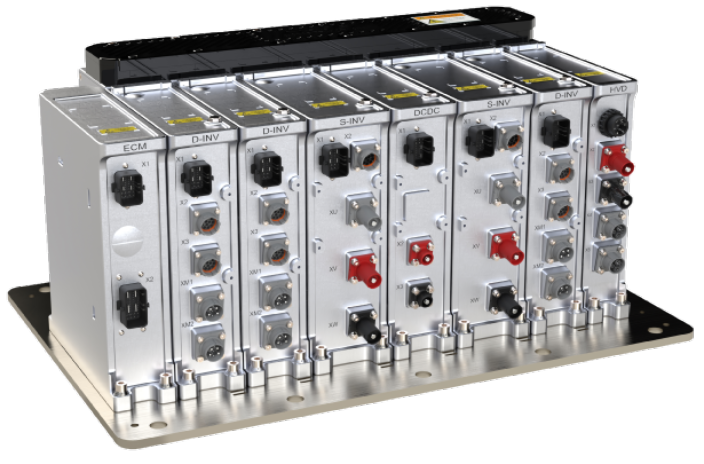
Electronics
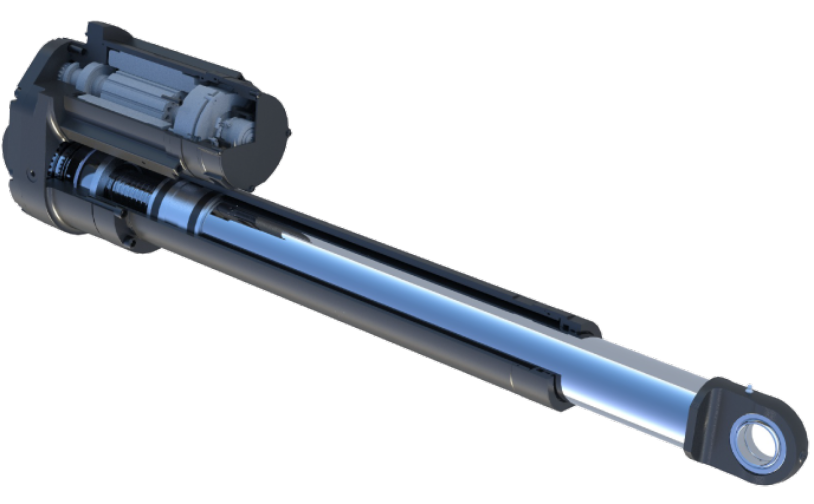
Linear Actuation
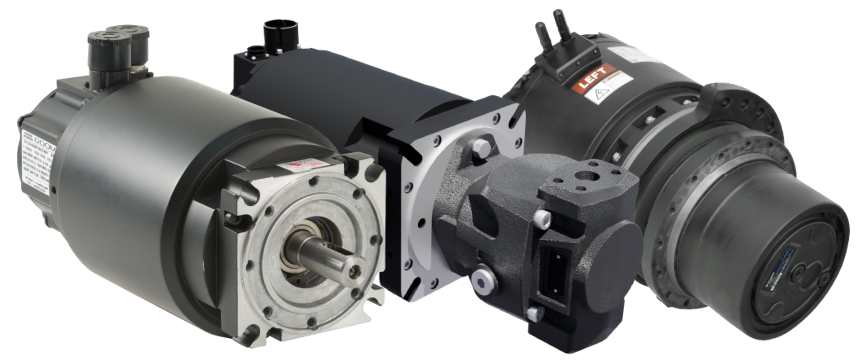
Motors
Where Motion Control and Power Electronics Converge
Electrified construction vehicles demand tight, real-time coordination between power systems and motion control. Fragmented, multi-vendor architectures introduce integration risk at every interface, slowing development, multiplying failure points, and complicating field support.
Moog eliminates that risk by engineering hardware and software together, under one platform.
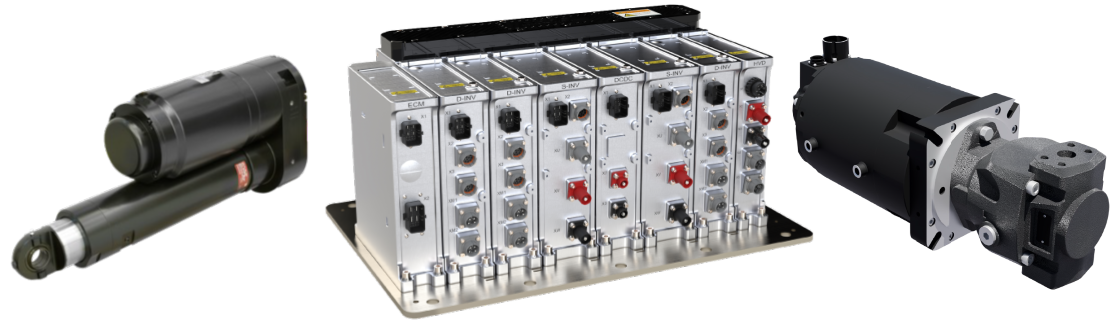
Unified Hardware and Software Architecture
- Motion control modules designed to work together from day one
- Integrated power distribution with no external dependencies
- Embedded control software developed alongside hardware
- Remote software update capability across deployed fleets
Built for the Demands of Electrification at Scale
- Advanced diagnostics for large, multi-axis electric vehicles
- High-reliability architectures designed for field durability
- Scalable across machine platforms with minimal re-engineering
Designed for Global OEM Electrification Programs
By becoming a system-level partner from the start, Moog helps OEMs avoid the costly redesigns that come from solving integration challenges late in the development cycle.
Early-Stage System Architecture Partnership
We engage during the design phase to shape scalable system architecture, improve serviceability, and ensure faster market introduction. This collaborative approach reduces risk before it becomes cost.
Reducing Risk Across the Electrification Lifecycle
Poor system integration doesn’t just slow development. It creates cascading risk across the entire product lifecycle. The consequences show up as costly rework, missed delivery deadlines, field downtime, supplier quality escapes, and loss of market competitiveness.
A Unified Platform Instead of Fragmented Vendors
Rather than patching together components from disconnected suppliers, Moog provides a unified platform that controls risk at the system level:
- Modular system efficiency that reduces wiring, parts count, and assembly time
- Integrated hardware/software control that eliminates multi-vendor interface failures
- Remote diagnostics that replace expensive on-site service visits
- Simplified inventory through reusable, standardized components
- Predictable scalability across full machine line portfolios
Start with the System Challenge
Moog Construction evaluates system architecture, integration risk, and fleet scalability to develop a unified electrification strategy tailored to your program goals.
Common starting points include:
- Electrifying legacy diesel platforms
- Simplifying complex wiring architectures
- Integrating software across hardware ecosystems
- Scaling electrification across multiple vehicle programs