

DESIGNED TO ADAPT. BUILT TO PERFORM.
Slip Rings and Cable Reels for Continuous Rotation
Power, signal, and data transfer that doesn’t wrap, fatigue, or fail when your machine keeps turning.
Standard Wiring Was Never Built for 360° Rotation
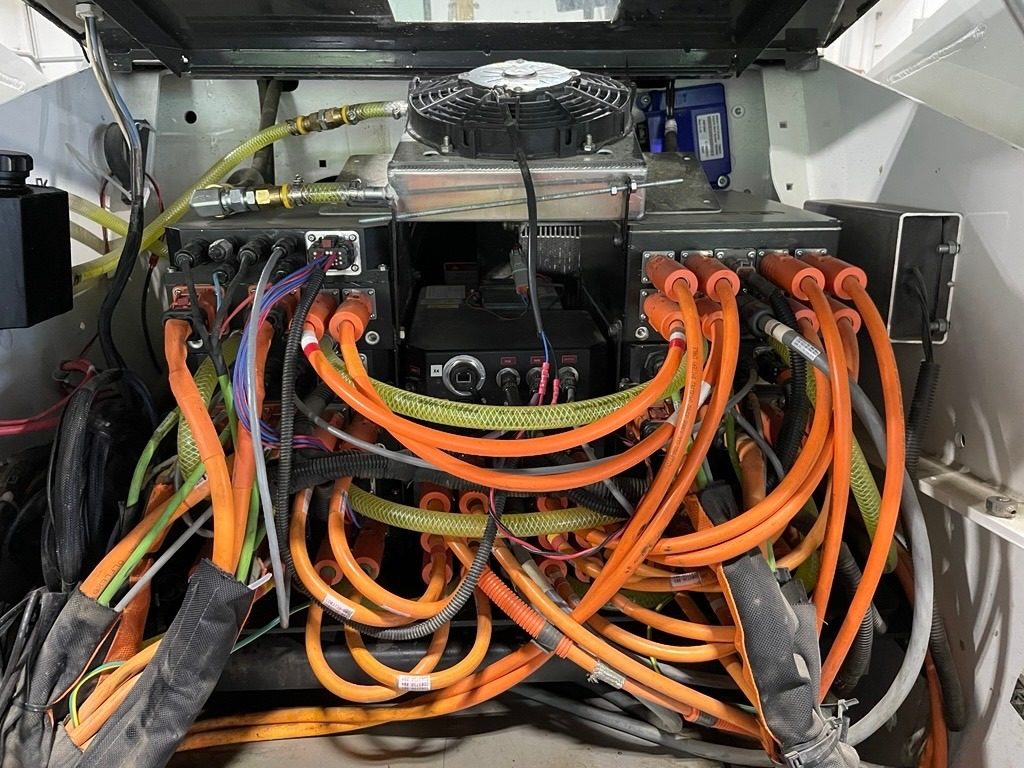
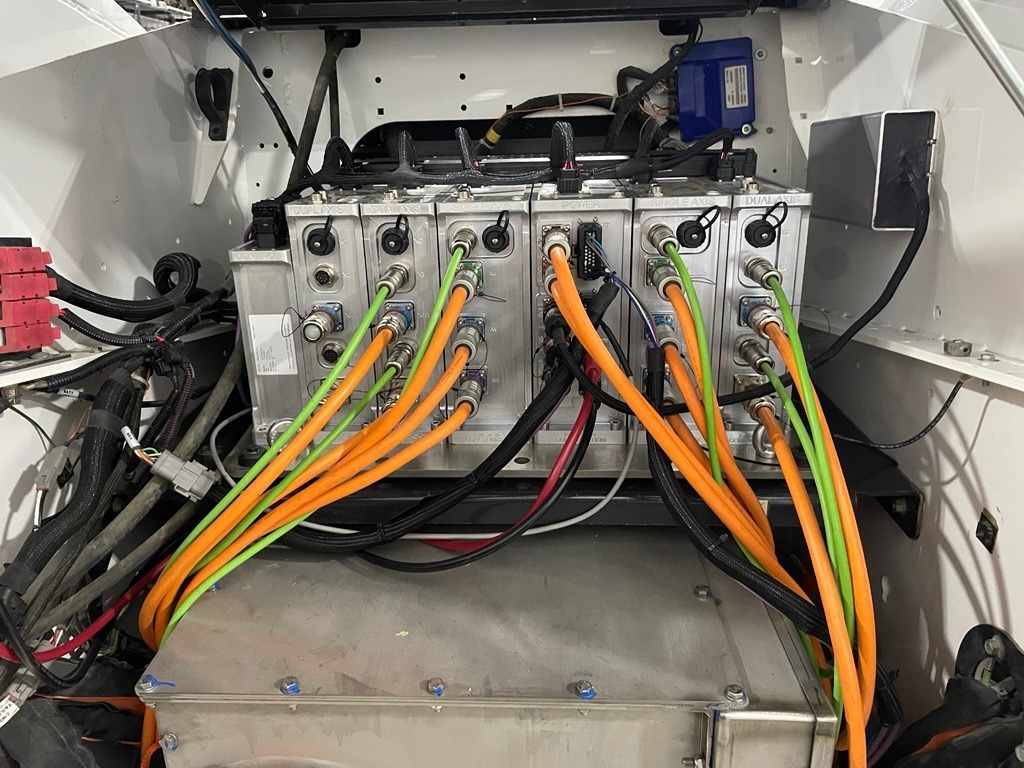
Any machine with a rotating superstructure, a slewing turret, or a drum that keeps winding has a problem that a standard cable can’t solve. Wire has a fixed length and a fixed number of twists it can survive before it fails.
- Cables wrap, kink, and fatigue with every rotation cycle
- Continuous or unrestrained rotation beyond 360° breaks a fixed-wire connection outright
- Exposed wiring is vulnerable to corrosion, moisture, and vibration in the field
- Signal and data integrity degrades at the exact connection point where the machine needs it most
A slip ring or cable reel is not an upgrade. It’s the only way to move power, signal, and data across a rotating joint without the wire itself becoming the point of failure.
One Supplier for Signal, High Power, and Retractable Cable
- Standard slip rings for signal, sensor, and lower-current power transfer
- High power slip rings (SE Series) for high-voltage, high-current electrified applications
- Spring-driven cable reels (F 6947 / F 6948) for self-retracting power and data cable management
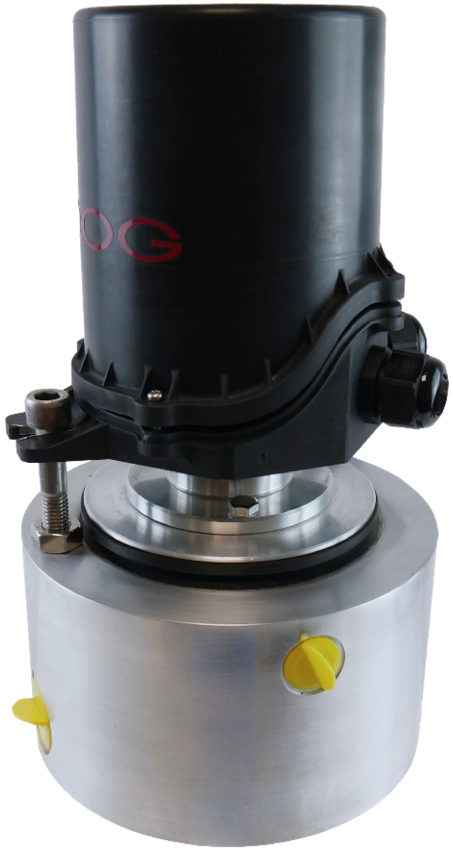
Slip Rings
Slip ring transmitters, also called rotary joints or transfer systems, move electrical power, signals, or data between a stationary base and a rotating structure. They are the right choice when a machine needs continuous rotation beyond what a fixed cable can handle, and the load is signal or moderate current rather than high-voltage power.
Every Moog construction slip ring is tested against the environments these machines actually operate in: freezing job sites, standing water, vibration from continuous duty cycles, and temperature swings that would degrade a lower-grade connector.
Built for:
- Sensor and control signal transmission on rotating turrets and superstructures
- Data transmission protocols including Ethernet and CAN bus
- Combination configurations with rotary unions where both fluid and electrical transfer are needed on the same joint

High Power Slip Ring
Electrification changes what a slip ring has to carry. Where a diesel machine’s rotary interface mostly handled signal and low-voltage control, an electrified crane, excavator, or turret now has to move real power, safely, through that same rotating joint. Moog’s SE Series high power slip rings were engineered specifically for that shift.
Each model in the series is rated for high-voltage and high-current transmission in a compact housing, with sealing up to IP67/IP69K available and a -40°C to +80°C operating range as standard. Configuration and current capacity scale by model, so the right choice depends on the voltage and amperage your platform actually needs to move.
| General Performance Capabilities | ||||
|---|---|---|---|---|
| Model | Current | Voltage | Housing | Protection Class |
| F 7103 Series | Up to 125 A | Up to 690 VAC | 200 mm OD, variable length | IP69K |
| F 7203 G Series | Up to 250 A | Up to 1,000 VAC | 315 mm OD, extra-short structure | IP65, Data IP69K |
| F 7203 C Series | Up to 500 A | Up to 1,000 VAC | 355 mm OD, variable length | IP65, Data IP69K |
| F 7214 Series | Up to 1,500 A | Up to 1,000 VAC | 511×511 mm (1,000A) / 550×750 mm (1,500A) | IP65, Data IP69K |
| F 5155 Series | Up to 500 A | Up to 750 VAC | 200-500 mm OD | Up to IP67/69K |
Also supports: Ethernet, Gigabit, and CAN bus data protocols, with optional encoder compatibility for closed-loop feedback applications.
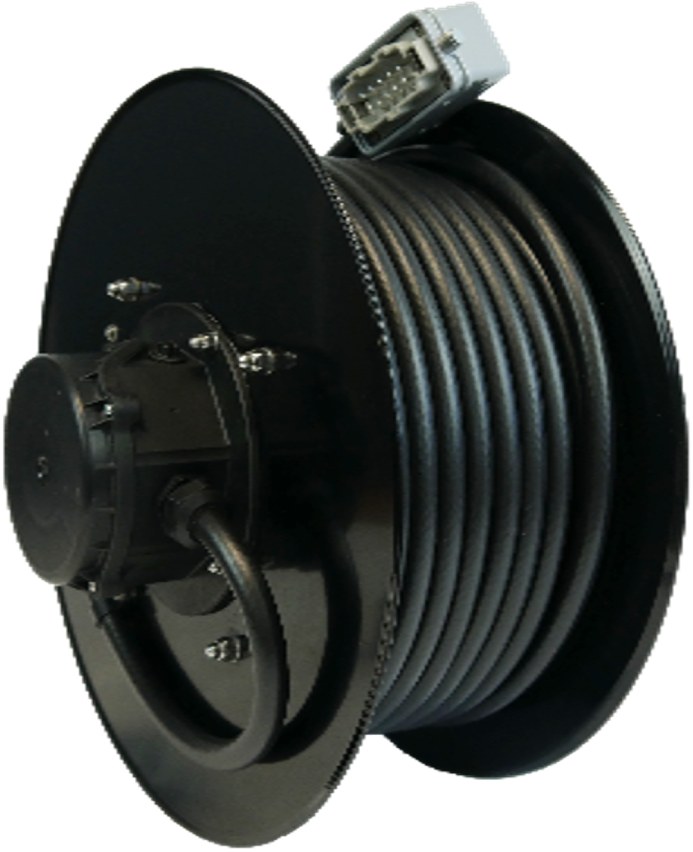
Spring Diven Cable Reel Series F 5947
Some machines don’t just rotate. They need cable that pays out and retracts as the machine moves, without an operator managing it by hand. Tower cranes, mobile cranes, harbor cranes, electric excavators, concrete pumps, and drilling rigs all rely on spring-driven cable reels to keep power, control signal, and increasingly sensor data connected while the machine is in motion.
The F 6947 and F 6948 series is Moog’s next-generation cable reel line, replacing the earlier F 5947 generation with a modular design built around a limited set of spring and side-plate variants. Fewer core components means faster customization and lower cost, without giving up the reliability the original F 5947 was already known for.
What changed from the previous generation:
- Modular spring and side-plate architecture reduces part variation and speeds up custom configuration
- Increased spring turns extend winding length and service life
- Travel speeds up to 1 m/s on standard models
- Slip ring assemblies rated to IP6K9K depending on model
- Full operating range of -40°C to +80°C, with resistance to seawater, UV, and oil exposure
Configuration options:
- Reel lengths from 10 m to 80 m
- Reel diameters of 202 mm or 302 mm
- Reel widths of 85 mm, 120 mm, 155 mm, or 190 mm
- Disc diameters of 330 mm or 500 mm
- Power transmission up to 32 A at 60 VAC or 500 VDC
- Data transmission including Ethernet, Profinet, and CAN bus
- Optional integrated sensor systems, including angle encoders for length measurement
Maintenance-free operation is rated for more than 10 million slip ring revolutions, with up to 100,000 drum cycles possible depending on configuration.
Where Moog Slip Rings and Cable Reels Perform
These systems are already running in the field across multiple machine categories and industries:
- Tower, mobile, and harbor cranes
- Electric excavators, concrete pumps, and drilling rigs
- Mobile conveyor belts and lifting platforms
- Wastewater treatment and fire department equipment
- Airport ground support, including electric vehicle and bus charging applications
Why OEMs Choose Moog for Rotary Transfer
One partner, three transfer needs.
Standard signal, high power, and retractable cable management all come from a single supplier with one point of technical accountability, instead of three vendors with three different support processes.
A track record that predates most of the industry’s electrification push.
Moog has designed and manufactured current transfer systems for over 100 years, and Moog Rekofa has supplied cable reel and slip ring solutions to major crane and construction OEMs for decades.

Built for the environment, not just the spec sheet.
Every product line is tested against corrosion, vibration, temperature extremes, and continuous duty cycles, not just rated for them on paper.

Configurable without a custom-engineering timeline.
Modular spring, side-plate, and housing options mean OEM-specific configurations don’t require a from-scratch design cycle.
Ready to spec the right rotary transfer system?
Our engineers can walk you through current, voltage, and data requirements for your platform, and help you determine whether a standard slip ring, high power slip ring, or cable reel configuration is the right fit.
Frequently Asked Questions
What is a slip ring used for in construction equipment?
A slip ring, also called a rotary joint or rotary electrical interface, transmits electrical power, signal, or data between a stationary component and a rotating one. On construction machinery, that typically means the connection between a machine’s chassis and its rotating turret, superstructure, or drum, allowing continuous or unrestrained rotation beyond 360° without twisting or breaking a fixed cable.
What is the difference between a slip ring and a spring-driven cable reel?
A slip ring transmits power and data across a continuously rotating joint, like a crane’s slewing ring. A spring-driven cable reel manages a length of cable that extends and retracts as a machine or component moves, using an integrated spring mechanism and often an integrated slip ring assembly at the reel’s center. Many mobile crane and excavator platforms use both: a slip ring for the rotating superstructure and a cable reel for cable management on a boom, winch, or auxiliary system.
How do I choose between a standard slip ring and a high power slip ring?
The deciding factor is current and voltage. Standard slip rings are built for signal, sensor, and lower-current power transmission. High power slip rings, like Moog’s SE Series, are engineered for high-voltage and high-current transfer, which is increasingly necessary as construction machines move toward full electrification. If your platform needs to move real drivetrain power through a rotating joint, a high power slip ring is the correct specification.
What environmental ratings do Moog's slip rings and cable reels meet?
Ratings vary by model and configuration. Moog’s high power slip ring series is rated up to IP67/IP69K depending on the model, and the F 6947/F 6948 cable reel series offers slip ring assemblies rated to IP6K9K depending on configuration. Both product lines are rated for operation across a -40°C to +80°C temperature range and are tested for resistance to corrosion, vibration, and moisture.
Can these systems support Ethernet, CAN bus, or other data protocols alongside power transmission?
Yes. Both the slip ring and cable reel lines support data transmission protocols including Ethernet, Profinet, and CAN bus, in addition to power transfer, allowing a single rotary interface to carry control signals, sensor data, and power simultaneously.
Back